

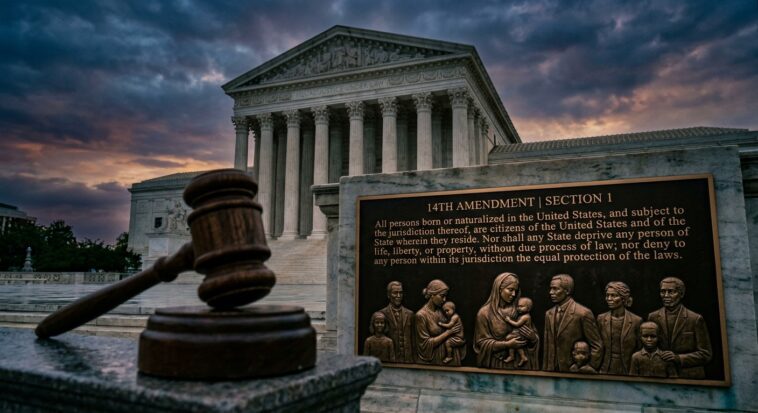
On April 1, 2026, the Supreme Court will hear oral arguments in one of the most consequential cases in recent memory. At stake: whether millions of people born in the United States can be stripped of their citizenship by executive order.
The Order That Triggered a Constitutional Crisis
President Trump signed the executive order on his first day back in office, January 20, 2025. The measure would deny automatic citizenship to babies born to undocumented parents or those here on temporary visas. It never took effect—courts blocked it within weeks—but the legal battle has raged ever since.
Why does this matter? The 14th Amendment says anyone born “in the United States, and subject to the jurisdiction thereof” is a citizen. The Trump administration argues that phrase has been misunderstood for over a century.
What the Administration Wants
Solicitor General D. John Sauer contends the citizenship clause was meant only to ensure formerly enslaved people and their children got protection—not to grant citizenship to everyone born on American soil. He calls the current interpretation a “mistaken view” with “destructive consequences.”
The government wants the justices to embrace what it calls the “original meaning” of the Amendment. Under this reading, children of temporary visitors or undocumented immigrants wouldn’t automatically become citizens.
The Other Side: A Attack on Constitutional Foundations
Critics aren’t buying it. The challengers argue the administration is “asking for nothing less than a remaking of our Nation’s constitutional foundations.” They point to an 1898 Supreme Court ruling in United States v. Wong Kim Ark, which affirmed birthright citizenship for a child born to Chinese parents in San Francisco.
That precedent has stood untouched for 127 years. Lower courts have repeatedly cited it while striking down Trump’s order. Not a single judge has sided with the administration on the merits.
Real Consequences for Real Families
Amanda Frost, who directs the Immigration and Human Rights Program at the University of Virginia School of Law, described what the order would mean in practice: “That child is born a non-citizen. Denied all the benefits and privileges of citizenship and theoretically deportable on day one of their life.”
Data from the Pew Research Center suggests roughly 150,000 children born annually in the U.S. would be affected—plus about 4.6 million American-born kids already living with an undocumented parent.
What Happens Next
The justices will focus much of Wednesday’s argument on a single phrase: “subject to the jurisdiction thereof.” The government says this means being “completely subject” to U.S. authority. Plaintiffs counter it only excludes children of foreign diplomats and hostile forces.
A decision is expected by late June or early July. Until then, birthright citizenship remains the law of the land.
Is this the moment the 14th Amendment gets rewritten? We’ll know in a few months.
Source: SCOTUSblog – The key arguments in the birthright citizenship case
GIPHY App Key not set. Please check settings