

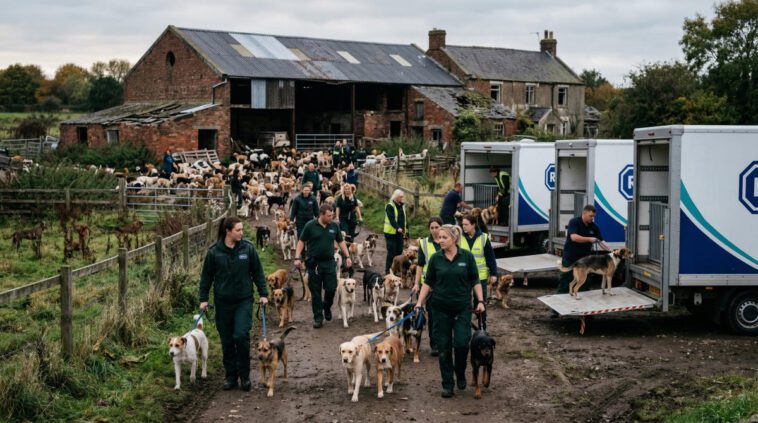
When investigators arrived at the property in question, they expected to find the usual cases of neglect — maybe ten, fifteen dogs at most. What they found instead left even the most seasoned animal welfare officers speechless. Two hundred and fifty dogs. All living in a single home. All in desperate need of help.
The rsPCA 250 dogs rescue operation that followed wasn’t just a headline — it was a emergency. And the photo that emerged from that day? Social media erupted with accusations that it had to be fake. AI-generated, people said. There’s no way this is real.
But it was real. Every bit of it.
The Day rsPCA 250 Dogs Rescue Became Reality
Inspectors had received tip-offs for weeks. Neighbours reported constant barking, unusual foot traffic, vehicles coming and going at odd hours. When they finally secured a warrant and stepped inside, the scene defied belief. Dogs were everywhere — in every room, in every corner, living in conditions that no animal should endure.
One officer on the scene described it as “walking into a different world.” The smell alone was overwhelming. But what struck most was the silence. These dogs had learned not to bark. They had learned that noise brought trouble.
The rsPCA 250 dogs rescue team immediately swung into action. Vets were called. Transport was arranged. Foster homes were mobilisation. It took three days to safely extract every single dog from the property.
Why Did No One Intervene Sooner?
This is the question that haunts every person who hears this story. How does someone accumulate 250 dogs in a single home without triggering serious concern? The answer, as with most cases of animal hoarding, is gradual and insidious.
It often starts with someone who genuinely loves animals. They take in one or two strays. Then a few more. Before long, they’re convinced they’re the only ones who can save these dogs. The lines between rescue and hoarding blur until it’s too late — for the owner and especially for the animals.
The rsPCA 250 dogs rescue forced investigators to confront this painful reality. The person living in that home wasn’t running a puppy farm or a fighting operation. They genuinely believed they were helping. That belief, however well-intentioned, created a crisis that now demands real solutions.
Where Are All Those Dogs Now?
This is the part of the story that gives hope. The rsPCA 250 dogs rescue didn’t end when the last dog was loaded onto a transport vehicle. That was only the beginning. Every single dog received full medical examinations. Many required surgery. Others needed months of rehabilitation — both physical and psychological.
Volunteers stepped forward in the hundreds. Foster families opened their homes. Some of the dogs have been adopted into loving families. Others are still in care, learning what it means to trust a human again. The ones who were most shut down — the dogs who had learned never to ask for anything — are finally discovering what warmth feels like.
It’s not a fairy tale ending. Some of these dogs will never fully recover. Some will require specialised care for the rest of their lives. But they are alive, and they are safe, and that matters more than words can express.
What This rsPCA 250 Dogs Rescue Teaches Us
Beyond the shock value and the viral confusion, this story carries lessons worth sitting with. Animal hoarding is not a crime of malice — it’s a crime of disconnection. The person at the centre of this case didn’t wake up one morning and decide to neglect 250 dogs. It happened slowly, aided by isolation, denial, and a system that struggles to catch silent emergencies.
We need better pathways for early intervention. We need communities that feel empowered to report concerns before they reach crisis point. We need the rsPCA and organisations like it to have the resources to respond when these cases do emerge — because they will continue to emerge.
The rsPCA 250 dogs rescue also challenges us to look at viral culture honestly. That photo from the scene went viral not because people cared — but because they assumed it was fake. We have become so conditioned to distrust images that we refused to believe evidence of genuine suffering was real.
How You Can Help Animals Like Those Rescued in the rsPCA 250 Dogs Rescue
If this story moved you, there are concrete ways to channel that feeling into action. The rsPCA relies on public donations to fund operations exactly like this one. Every pound goes toward veterinary care, foster support, and investigations.
Consider becoming a foster carer if your circumstances allow. The need is constant and the reward is immeasurable. Alternatively, volunteer your time at local shelters. Share real animal welfare stories on your social media — not to shock, but to educate.
And if you suspect something isn’t right in your neighbourhood — a property with too many animals, an owner who seems overwhelmed — don’t wait. Contact the rsPCA. Make that call. It might feel like interference, but it could be the intervention that saves lives.
The rsPCA 250 dogs rescue wasn’t a story that ended three days after the raid. It’s a story that’s still being written — in the康复 centres, the foster homes, and the families who chose to adopt despite the challenges. Every one of those dogs deserved better. Thanks to the work of dedicated people, they finally got it.
GIPHY App Key not set. Please check settings