

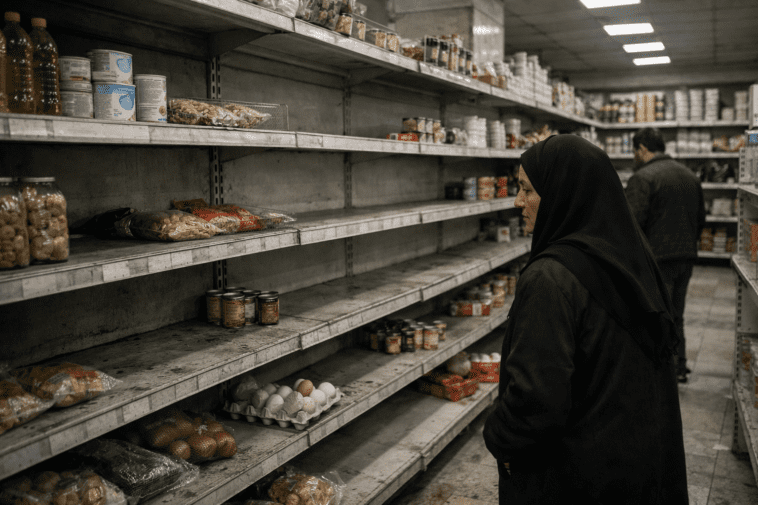
For most Americans, the standoff between Washington and Tehran plays out in headlines and cable news panels. Missiles. Ultimatums. Blame. But step back from the geo-political theater and you will find something harder to stomach — families in Tehran skipping meals because medicine costs too much, hospitals rationing anesthesia, and parents watching their children futures slip away under the weight of economic isolation.
What is really happening on the ground in Iran right now? And who bears the consequences when diplomats fail to find common ground?
The Anatomy of a Crisis
When the Trump administration reimposed sweeping sanctions in 2018, the goal was straightforward: choke off the revenue streams funding Iran nuclear program and regional militancy. The strategy worked, on paper. Oil exports plummeted. The rial lost roughly two-thirds of its value. But the human arithmetic tells a different story.
Hospital managers in cities like Isfahan and Shiraz have described walking through wards with fewer supplies than they need. We make choices no doctor should have to make, one hospital administrator told the BBC, speaking anonymously for fear of reprisal. Which patient gets the MRI. Which child waits another month for surgery.
Pharmaceutical imports — many of which are exempt under humanitarian provisions — still face delays due to banking restrictions. Even when waivers exist on paper, banks often refuse to process transactions rather than risk running afoul of US regulators. The result is a slow-motion health crisis that rarely makes the front page.
The Young People Caught in the Crossfire
Iran has one of the youngest populations in the Middle East — median age around 32. These are not regime loyalists or IRGC commanders. They are students, artists, small business owners. And they are drowning.
Unemployment among Iran youth hovers near 25%, with college graduates unable to find work in their fields. Tech startups that once attracted regional talent now struggle to access global payment platforms. A generation that grew up hopeful after the 2015 nuclear deal — when sanctions eased and the economy opened — watched that optimism curdle.
Is it any surprise that protests keep erupting? From December 2017 to November 2019 to September 2022, waves of demonstrations have shaken Iranian cities. The triggers vary. The underlying anger rarely fades.
What Negotiations Actually Look Like
Behind the ultimatum rhetoric, back-channel conversations continue. Current discussions center on a nuclear freeze — Iran would stop advancing its program while sanctions relief is debated. It is not a grand bargain. It is not a normalization of relations. It is the kind of imperfect compromise that keeps crises from boiling over.
Critics argue any deal legitimizes a regime that suppresses dissent. Supporters counter that the alternative — escalating pressure with no off-ramp — produces more suffering without changing behavior. Both positions contain uncomfortable truths.
The honest answer? There is no clean solution. There is only the choice between managing a dangerous rivalry and pretending it will simply resolve itself.
The Stakes Do not Get Smaller
Every escalation carries the risk of miscalculation. Iran regional proxy networks — in Iraq, Syria, Lebanon, Yemen — operate with varying degrees of coordination. A strike on a nuclear facility could trigger responses far beyond Iran borders. Insurance rates for shipping in the Persian Gulf already reflect this reality.
So what happens next? The diplomats will keep talking. The sanctions will keep squeezing. And somewhere in Tehran, a mother will decide whether to fill her daughter prescription or pay the rent.
The headlines will move on. Her choice will not.
GIPHY App Key not set. Please check settings